


























Diabetes is one of the most common diseases in the UK, which can cause long-term, serious complications if left untreated or not properly managed. With proper care from an experienced doctor, symptoms can be alleviated and, in some cases, the condition can be reversed.
Both types of diabetes, type 1 & type 2, affect the body’s metabolism, the process through which it converts food into energy. In both cases, blood sugar levels are affected, & the body’s insulin is unable to break down glucose.
Type 1 diabetes is a genetic autoimmune disorder affecting the body’s insulin production; it is identified in childhood.
Type 2 diabetes, which is more common, occurs when the pancreas stops being able to produce insulin. Type 2 diabetes develops as a result of obesity & overweight, lack of exercise, poor diet, & elevated levels of cholesterol.
The Diabetes Testing Options include:
- Platinum profile – £179 – this includes fasting glucose, HbA1C and many other helpful markers
- Silver profile – £59 – this includes fasting glucose and other helpful markers
- Fasting insulin level – £75
- HbA1C test alone – £85
If you are concerned about diabetes, we recommend having a consultation with one of our experienced doctors.
When should I get tested?
You should get tested for diabetes if advised by your doctor, if you have a strong family history of diabetes, or if you are experiencing symptoms of type 1 or type 2 diabetes, including increased thirst, frequent urination especially at night, low energy levels, weight loss, or muscle loss.
Type 2 diabetes typically does not affect those under 40, but the number of cases amongst younger people is on the rise. We always recommend a GP consultation if you are seeking diabetes testing.
What the test includes
The test for diabetes is a blood test; you can also have a consultation with a doctor at additional cost.
Procedure
Preparing for test
During the test
Results
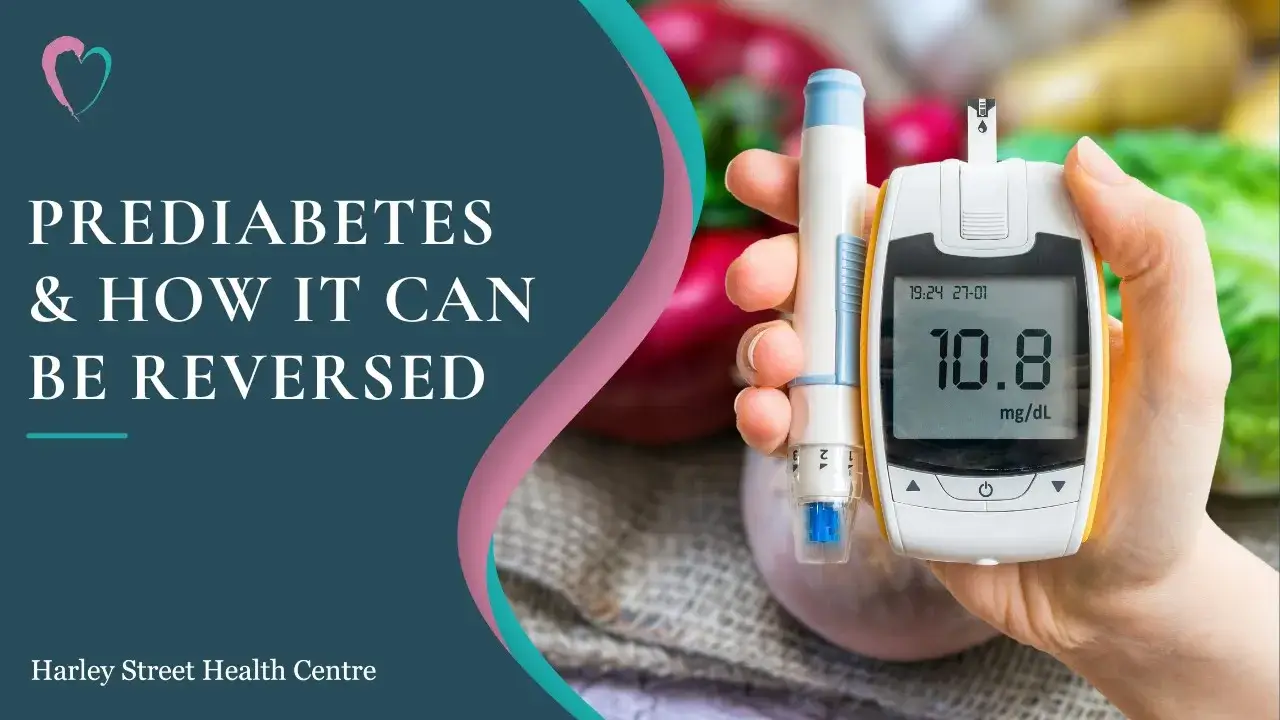
What is Prediabetes & how it can be reversed

 HEALTH CHECKS